
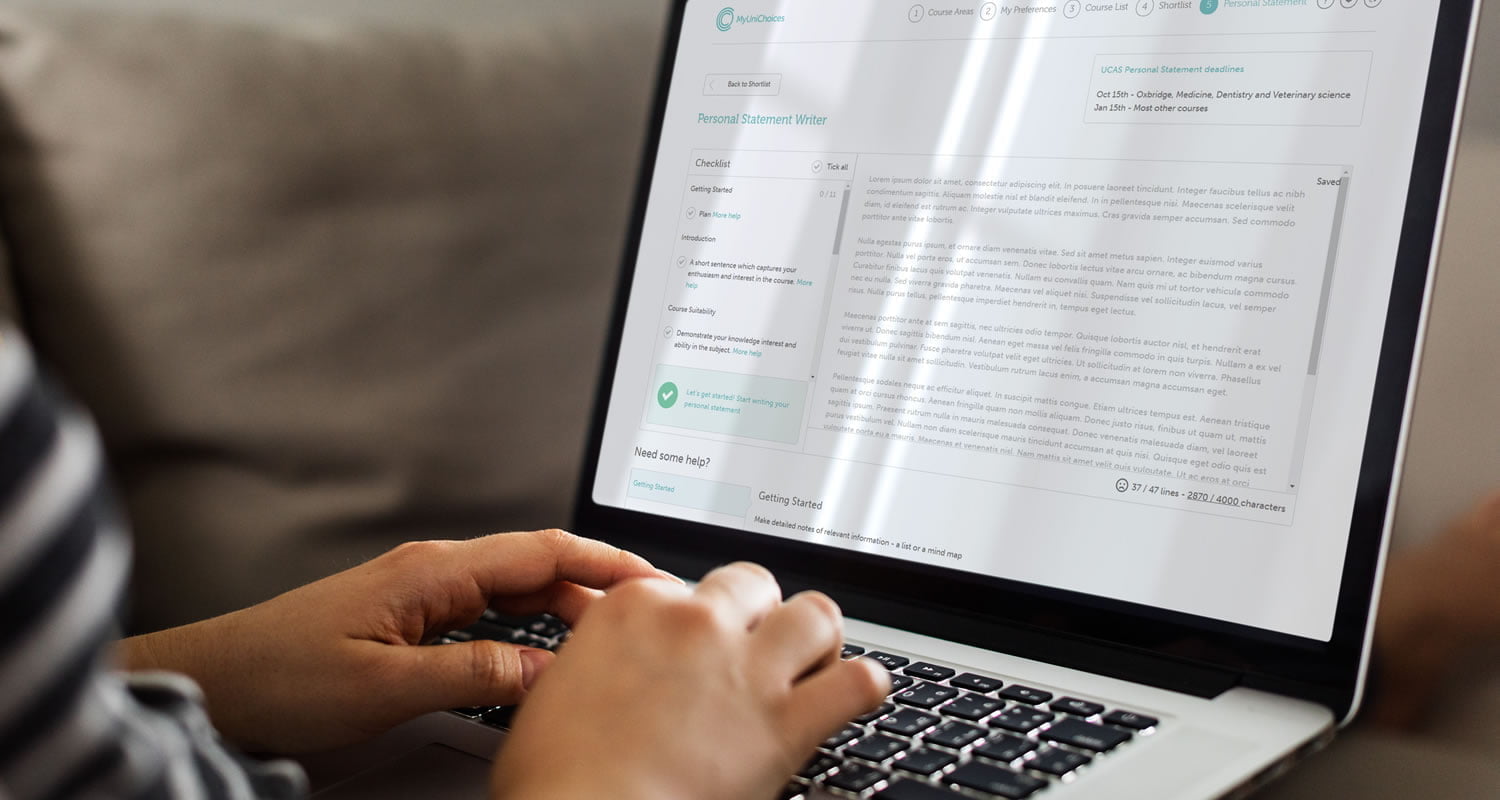
Thinking about applying for university? Then you’ll probably need to write a personal statement. For 2026 entry onwards this takes the form of three structured questions that you answer through UCAS, explaining why a university should give you a place on one or more of its courses.
Personal statements can be crucial to your application and are often tricky to write. But don’t worry – we’ve put together some tips to help you avoid common mistakes and create a winning personal statement.
1. Start with the courses
When you sit down to write your personal statement, start with the courses you’re applying for. After all, the whole point of your personal statement is to convince the universities you’re applying to to give you places on these courses.
Make sure you say why you want to study the course and give reasons why you think you’d be right for it. Don’t mention individual courses specifically, as all the universities you apply to will get the same copy of your statement. But read up on the courses you’re applying for, identify common themes or requirements, and make sure you write about them.
2. Highlight what makes you stand out
The universities you apply to will probably get thousands of applicants. So, when you’re writing your statement, make sure you let your personality shine out. This will help admissions tutors to remember you and could be the thing that secures you a place.
Stand out by highlighting your key achievements and elements of your character that mean you’ll excel on your course and be an asset to the university. Just make sure that you can relate anything you mention back to why you’d be a great fit with the course or the university – irrelevant personal details won’t help you and will just use up your character count.
3. Understand the new format and its limits
Since the 2026 entry cycle, UCAS has replaced the single free-text statement with three questions: why you want to study the course or subject; how your qualifications and studies have helped you prepare; and what else you have done to prepare outside of education. Each answer must be at least 350 characters, and the three answers combined can’t exceed 4,000 characters (including spaces). Plan your content across the three questions rather than writing one long essay – and don’t try to squeeze in more than the limit, or your answer will be cut off.
4. Take your time
It’s really important to take your time with your personal statement. Don’t leave it till the last minute – a rushed version won’t be your best effort and will probably be full of typos. Start early and expect to write a couple of drafts, or at least make quite a few changes before you send it. You’ll spend more time doing it but it’ll be worth it if your personal statement helps to get you on your dream course.
5. Share the load
Your personal statement has to be unique and your own work – plagiarism detection software will catch you out if you’re tempted to copy one you’ve found online. But this doesn’t mean that you’re not allowed help from other people. Ask your friends, teachers or family to read over your drafts and give you feedback. The chances are they’ll have tips that you haven’t thought of and will be able to spot typos you haven’t noticed.
6. Check your deadlines
There’s nothing worse than spending hours writing the perfect personal statement, only to find that you’ve missed one or more university course deadlines. The application deadline for most undergraduate university courses is in January, but if you’re applying for medicine, dentistry, design or to Oxbridge this can be different.
So, stay on the safe side and make sure you know the deadlines for all the courses you plan to apply for in good time.
Follow these tips and you should find it much easier to write a personal statement that helps you get the course places you want.
Still struggling to identify the best higher education courses for you? Try MyUniChoices. It’ll help you find the ideal university courses for you based on your interests, qualifications and abilities.